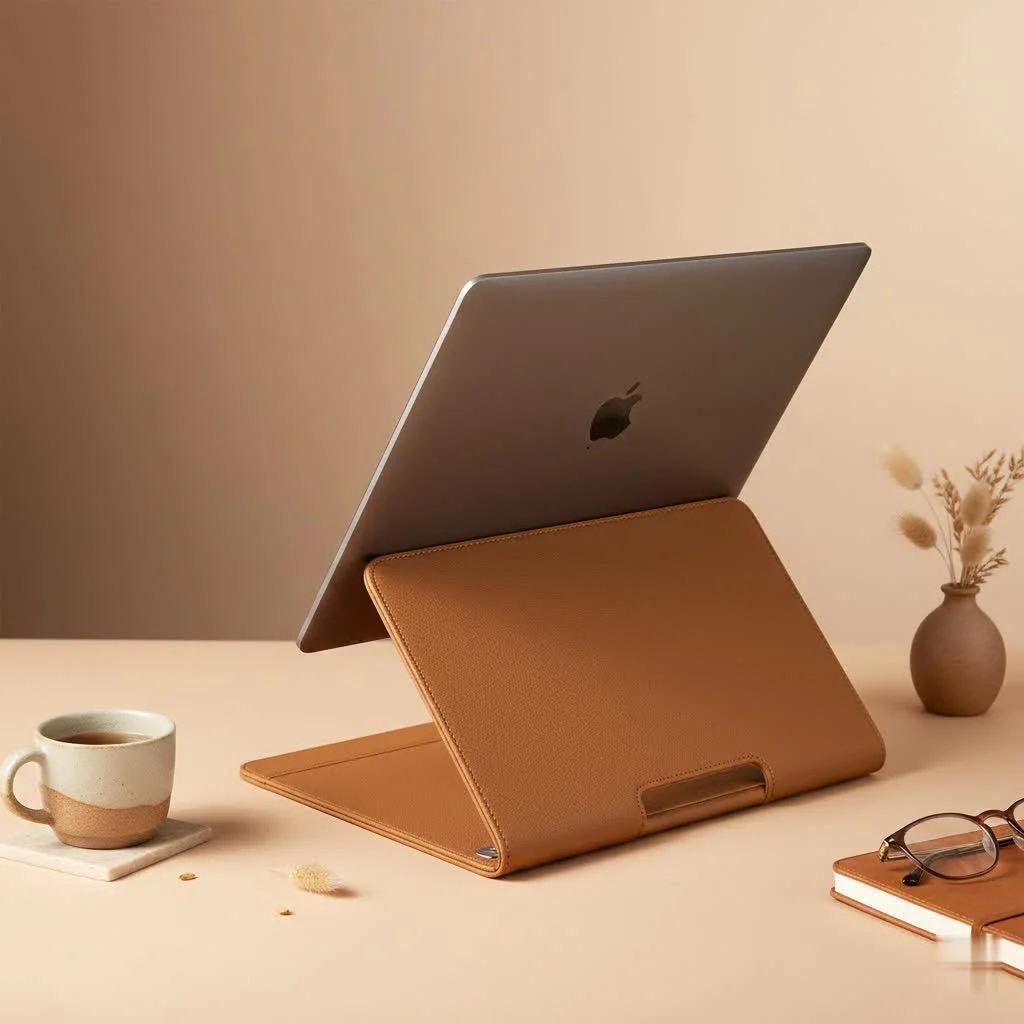
An adjustable laptop stand for desk setups is a crucial ergonomic tool that elevates your laptop screen to eye level, directly addressing the common issue of neck and shoulder pain caused by hunching. This simple accessory significantly improves posture, reduces eye strain, and enhances overall productivity by promoting a neutral, comfortable working position.
Why Your Body is Crying Out for a Laptop Stand
Laptops are marvels of portable engineering, but their design has a fundamental ergonomic flaw. The attached screen and keyboard force you to choose between positioning your hands correctly or your head correctly—you can’t do both. Inevitably, your head tilts down, your shoulders round forward, and you end up in the dreaded “laptop hunch.”
The Ergonomic Hazard of Flat Laptops
When your laptop sits flat on your desk, your screen is far below eye level. To see it, you have to crane your neck downwards. This position puts significant strain on your cervical spine. Think of it like holding a bowling ball: holding it close to your body is easy, but holding it with your arm outstretched is exhausting. The further your head juts forward, the harder your neck and back muscles have to work to support it, leading to fatigue, stiffness, and chronic pain.
Reclaim Your Posture, Reclaim Your Comfort
An adjustable laptop stand directly corrects this issue. By lifting your laptop screen to eye level, it allows you to sit up straight, with your head properly aligned over your shoulders. This neutral posture is the cornerstone of good ergonomics.
- Reduces Neck and Back Pain: This is the most immediate and impactful benefit. Aligning the screen properly eliminates the primary cause of strain.
- Decreases Eye Strain: When your screen is at the right height and distance, your eyes don’t have to work as hard to focus, reducing fatigue and dryness.
- Boosts Energy and Focus: When your body isn’t fighting discomfort, you have more physical and mental energy to dedicate to your work.
An Unexpected Bonus: A Cooler, Happier Laptop
Laptops generate a lot of heat, and their internal fans work hard to dissipate it. Placing your device flat on a desk can suffocate the ventilation ports, trapping heat. An adjustable laptop stand elevates the device, allowing for 360-degree airflow. This improved cooling helps prevent your laptop from throttling its performance under heavy loads and can even contribute to a longer lifespan for its internal components.
How to Choose the Perfect Adjustable Laptop Stand for Your Desk
Not all stands are created equal. Finding the right one depends on your specific needs, your laptop, and your workspace. Here at Wweaw, we focus on a few key pillars when designing and recommending stands.
The Golden Rule: Height and Angle Adjustability
|
Our Picks for the Best Laptop Stand in 2026
As an Amazon Associate I earn from qualifying purchases.
|
||
| Num | Product | Action |
|---|---|---|
| 1 | BESIGN LS03 Aluminum Laptop Stand, Ergonomic Detachable Computer Stand, Notebook Riser Compatible with Air, Pro, Dell, HP, Lenovo More 10-15.6\" Laptops, Silver |

|
| 2 | Adjustable Laptop Stand, Computer Stand with 360 Rotating Base, Ergonomic Laptop Riser Mount for Desk Foldable Protable Computer Desk Fits with MacBook Pro Air (10-16\") - Black |
|
| 3 | BESIGN LS03 Aluminum Laptop Stand, Ergonomic Detachable Computer Stand, Riser Holder Notebook Stand Compatible with Air, Pro, Dell, HP, Lenovo More 10-15.6\" Laptops, Black |
|
| 4 | tounee Telescopic Laptop Stand for Desk with 360° Swivel Base, Sit to Stand, Height Adjustable, Portable Riser Holder for Good Posture, Compatible with MacBook Pro, All Laptops 10-17\"-Gray |
|
| 5 | Laptop Stand for Desk, Adjustable Laptop Riser ABS+Silicone Foldable Portable Notebook Holder, Ventilated Cooling Notebook Mount Computer Stand for 10-15.6” Laptops,Tablets-Black |
|
| 6 | acer Laptop Stand for Desk - with 360 Swivel Base, Rotating Laptop Riser for Desk, Adjustable Computer Stand for Laptops, Ergonomic Riser Holder Foldable, Portable MacBook Pro Air (10-16\") - Silver |
|
| 7 | OMOTON 360° Rotating Laptop Stand Riser for Desk, Ergonomic Foldable Computer Stand Adjustable Height Angles for Collaborative Work, Easy Storage Fit Macbooks,All Laptops up to 16 inches, Silver |
|
| 8 | Adjustable Laptop Stand for Desk, Metal Foldable Laptop Riser Holder, Portable Desktop Book Stands, Ventilated Cooling Computer Notebook Stand Compatible with 10-15.6” Laptops |
|
| 9 | Lamicall Adjustable Laptop Stand, Portable Laptop Riser, Aluminum Laptop Stand for Desk Foldable, Ergonomic Computer Notebook Stand Holder for MacBook Air Pro, Dell XPS, HP (10-17.3\'\') - Silver |
|
| 10 | Amazon Basics Sturdy and Portable Ergonomic Laptop Stand for Desk, Height Adjustable Riser with Ventilated Cooling, Foldable, Fits all Laptops up to 17.3 Inch, Silver, 10 x 8.7 x 6 in |
|
The “adjustable” part of the name is the most critical feature. A good stand should offer a wide range of height and angle options. This allows you to dial in the perfect position where the top of your screen is exactly at or just slightly below your eye level. Look for stands that are easy to adjust but lock securely in place without slipping.
Material and Stability: Will it Wobble?
Stability is non-negotiable. The last thing you want is your expensive laptop swaying with every keystroke.
- Aluminum Alloy: This is the gold standard for a reason. It offers an excellent combination of strength, lightness, and a premium finish that dissipates heat well.
- Steel: Heavier and very sturdy, often used for more robust, less portable stands.
- High-Quality ABS Plastic: Can be a good budget-friendly option, but ensure it’s well-constructed and has a high weight capacity.
Pay attention to the base design and the inclusion of anti-slip silicone pads on the surface and feet. These pads protect your laptop from scratches and keep the entire setup firmly planted on your desk.
Portability vs. At-Home Hero
Consider where you’ll be using your stand.
- For the Hybrid Worker: If you split time between home, the office, and a coffee shop, look for a lightweight, foldable design that can easily slip into your backpack.
- For the Dedicated Desk Setup: If your laptop rarely moves from your desk, you can opt for a heavier, more robust stand that might offer additional features without prioritizing a compact, foldable design.
Expert Take: According to Dr. Evelyn Reed, an ergonomics consultant, “The biggest mistake people make is buying a non-adjustable riser. Your ideal screen height is unique to your body, your chair, and your desk. An adjustable stand is the only way to guarantee a truly personalized and ergonomic fit.”
Setting Up Your Stand for Ergonomic Bliss
Owning a stand is the first step; using it correctly is the second. Follow this simple checklist to create your perfect ergonomic workstation:
- Position Your Stand: Place the adjustable laptop stand on your desk, ensuring it’s stable.
- Adjust the Height: Sit comfortably in your chair with your feet flat on the floor. Adjust the stand’s height so that the top edge of your laptop screen is at or just below your eye level. You shouldn’t have to tilt your head up or down to see the center of the screen.
- Set the Angle: Tilt the screen so it’s perpendicular to your line of sight. This helps reduce glare and ensures you’re not craning your neck.
- Introduce an External Keyboard and Mouse: This is crucial. With your laptop elevated, the built-in keyboard and trackpad are at an awkward height for typing. An external keyboard and mouse allow you to keep your wrists straight and your arms resting comfortably at a 90-degree angle.
Frequently Asked Questions (FAQ)
What’s the ideal height for a laptop stand?
The ideal height places the top of your laptop’s screen at or just below your eye level when you are sitting up straight. This varies for every individual, which is why an adjustable stand is essential for finding your personal sweet spot.
Can I use a laptop stand without an external keyboard?
While you can, it’s highly discouraged for long-term use. Elevating your laptop puts the built-in keyboard at an awkward and strenuous angle for your wrists and shoulders. For proper ergonomics, always pair an elevated laptop stand with an external keyboard and mouse.
Will an adjustable stand fit my 17-inch laptop?
Most stands specify their compatible laptop sizes and weight limits. Many high-quality aluminum stands are robust enough to support larger laptops up to 17 inches. Always check the manufacturer’s specifications to ensure a secure fit for your device.
Are plastic or metal stands better?
Metal stands, particularly those made from aluminum alloy, are generally superior in terms of durability, stability, and heat dissipation. High-quality plastic stands can be a good, lightweight alternative, but metal is typically the preferred choice for a long-lasting and sturdy desk setup.
How does a laptop stand help with cooling?
By lifting the laptop off the desk surface, a stand allows air to circulate freely around the entire chassis. This prevents heat from getting trapped underneath the laptop, allowing its internal cooling system to work more efficiently and keeping temperatures down.
A Small Investment for a Major Upgrade
In the grand scheme of your office setup, an adjustable laptop stand for desk use is a minor expense. Yet, its impact on your daily comfort and long-term health is enormous. It’s a simple tool that empowers you to work better, feel better, and put an end to the chronic aches and pains caused by poor posture. By taking control of your ergonomics, you’re not just buying a desk accessory; you’re investing in your own well-being and productivity for years to come.
Frequently Asked Questions
What is the ideal height for an adjustable laptop stand?
The ideal height for a laptop stand positions the top of your laptop's screen at or just below your eye level when you are sitting up straight. This personalized height helps maintain a neutral neck posture and reduces strain, making an adjustable model essential for optimal ergonomics.
Can I use a laptop stand without an external keyboard and mouse?
While technically possible, using a laptop stand without an external keyboard and mouse is highly discouraged for long-term ergonomic health. Elevating the laptop for screen height makes the built-in keyboard and trackpad awkward, leading to wrist and shoulder strain. For proper ergonomics, always pair an elevated laptop with external input devices.
Will an adjustable stand support a 17-inch laptop?
Many high-quality adjustable laptop stands, especially those made from aluminum alloy, are robust enough to support larger laptops up to 17 inches. It is crucial to always check the manufacturer's specifications for compatible laptop sizes and weight limits to ensure a secure and stable fit for your device.
Are metal or plastic adjustable laptop stands better for desk use?
Metal stands, particularly those crafted from aluminum alloy, are generally superior for desk use due to their enhanced durability, stability, and heat dissipation properties. While high-quality plastic stands can offer a lightweight and budget-friendly alternative, metal is typically the preferred choice for a long-lasting and sturdy ergonomic setup.
How does an adjustable laptop stand improve laptop cooling?
An adjustable laptop stand improves cooling by elevating the laptop off the desk surface, which allows for 360-degree air circulation around the device. This prevents heat from getting trapped underneath, enabling the laptop's internal cooling system to work more efficiently and maintain lower operating temperatures.
Setting Up Your Adjustable Laptop Stand for Ergonomic Bliss
Follow these simple steps to correctly set up your adjustable laptop stand and create an ergonomically optimized workstation, reducing strain and improving comfort.
Place the adjustable laptop stand securely on your desk. Ensure it is stable and positioned directly in front of you, allowing for comfortable viewing and access.
Sit comfortably in your chair with your feet flat on the floor. Adjust the standu2019s height so the top edge of your laptop screen is at or just below your eye level. You should not have to tilt your head up or down to see the center of the screen.
Tilt the laptop screen so it is perpendicular to your line of sight. This angle helps to minimize glare and ensures you maintain a neutral neck position, preventing unnecessary craning.
This step is crucial for proper ergonomics. With your laptop elevated, connect an external keyboard and mouse. This allows you to keep your wrists straight and your arms resting comfortably at a 90-degree angle, preventing strain.
Get our weekly buyer guide
Practical specs, not advice. Unsubscribe anytime.
I picked up one of the recommended stands in the mid-price range, and it’s been great for my posture. I used to get so much eye strain by the end of the day, but now my screen is at a much better height. The only minor thing is that it took a little while to find the perfect adjustment for my specific desk and chair, but once it’s set, it’s solid.
I was skeptical about how much a laptop stand could really help, but this guide convinced me to try one. My neck and shoulder pain from the ‘laptop hunch’ has seriously improved since I started using an adjustable stand. It’s amazing how much difference elevating my screen to eye level makes. Definitely a game-changer for my home office setup!
I got a stand after reading about how it helps with the ‘ergonomic hazard of flat laptops.’ It does elevate my screen, which is good, but the model I chose feels a little wobbly when I type directly on the laptop keyboard while it’s on the stand. I mostly use an external keyboard now, which defeats some of the portability, but it still helps with my neck.
This stand has totally transformed my productivity. I used to constantly shift around trying to get comfortable, but now I can work for hours without feeling that familiar back ache. It’s true what they say about the ergonomic flaw of laptops; this accessory really solves the problem of having to choose between hand and head positioning. Highly recommend for anyone working long hours on a laptop.